Causes of Water Scarcity
Water scarcity is primarily driven by climate change, which alters precipitation patterns and increases the frequency of droughts, reducing water availability. Rapid population growth further exacerbates this issue by escalating demand for water for drinking, agriculture, and industry. Additionally, pollution from industrial, agricultural, and household sources contaminates freshwater supplies, making less water safe for use. These factors combined create a significant strain on the world’s freshwater resources, leading to widespread water scarcity.
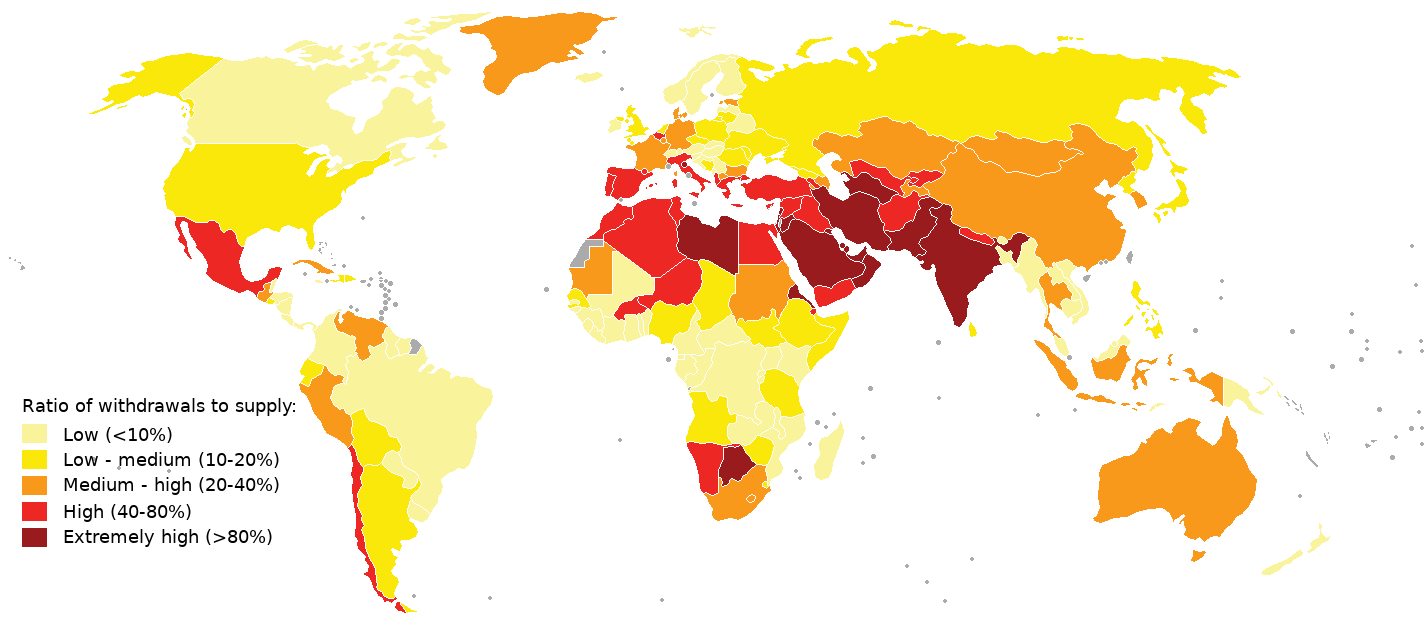
Map of Water Scarcity
This map highlights about the abundancy of water in every country.
Effects
Water scarcity has profound effects, including severe impacts on public health, agricultural productivity, and economic stability. Communities lacking reliable access to clean water face higher incidences of waterborne diseases and malnutrition. Agricultural sectors struggle with reduced crop yields, leading to food shortages and higher prices. Economically, water scarcity hampers industrial growth and exacerbates poverty, particularly in developing regions. Socially, it can lead to conflicts over water resources, displacing populations and destabilizing regions. The environmental impacts include the degradation of ecosystems and loss of biodiversity.

Drought
Natural events like droughts are effects or reasons on why some places have an abundance of water.
Solutions
Solutions to water scarcity encompass a combination of technological, policy, and conservation strategies. Technologically, the development and implementation of efficient irrigation systems, desalination plants, and wastewater recycling can significantly enhance water availability. Policy measures such as enforcing water management regulations, investing in infrastructure, and promoting international cooperation are crucial. Conservation efforts, including public awareness campaigns on water-saving practices, rainwater harvesting, and protecting natural water sources, also play a vital role. Together, these approaches aim to sustainably manage and preserve water resources for future generations.

Solutions
Water is limited, so therefore we must conserve and use water efficiently.